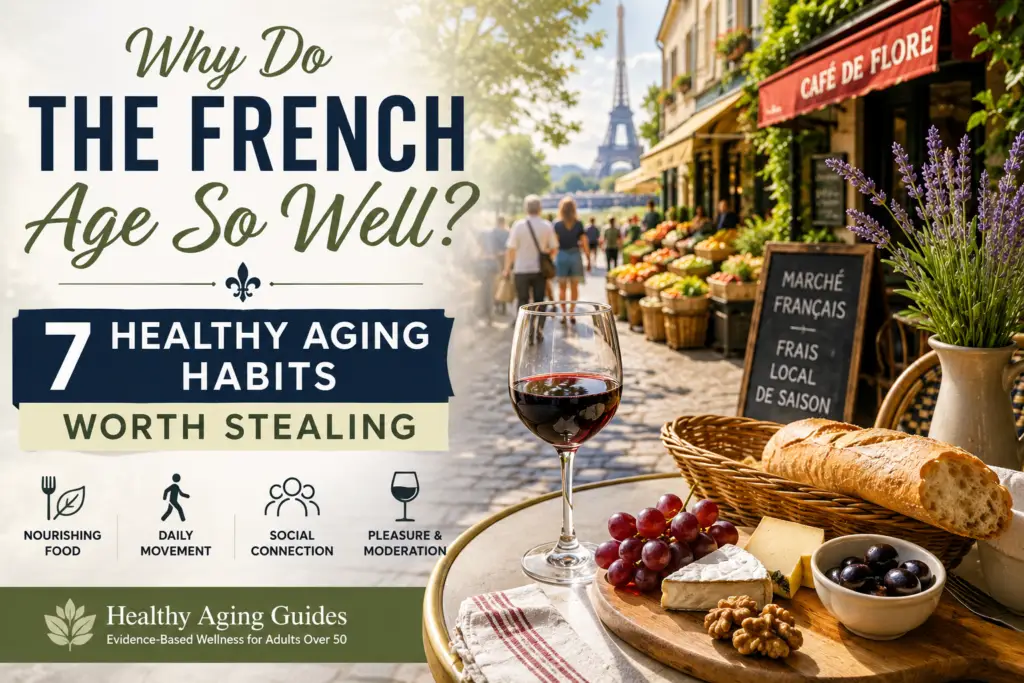
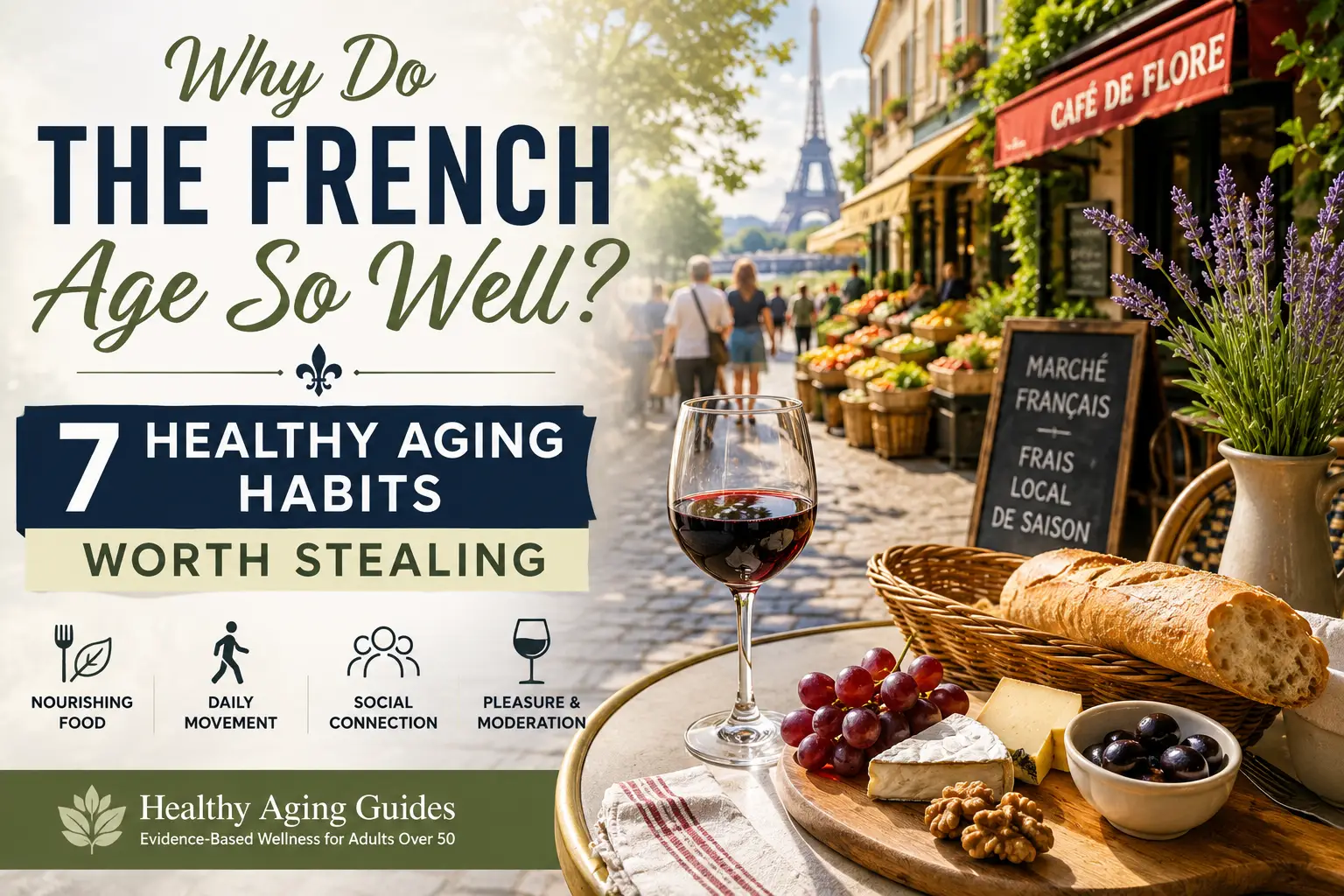
From leisurely meals and daily walking to social connection and wine culture, the French lifestyle offers some interesting lessons about aging well—but not always for the reasons you might think.
French healthy aging habits have long fascinated people interested in food, health and longevity.
Walk through a French neighborhood and you may see older adults shopping at local markets, walking to cafés, enjoying meals with friends, eating bread and cheese—and perhaps having a glass of wine with dinner.
It hardly resembles the strict diets and complicated wellness routines we’re often told are necessary for healthy aging.
So, do the French know something about aging well that the rest of us are missing?
There is no single “French secret” to longevity. Genetics, healthcare, income, environment and many other factors influence how long and how well people live. But several habits traditionally associated with French life overlap with what research tells us about healthy aging.
And surprisingly, the biggest lesson may have very little to do with wine.
1. Meals Are Something to Enjoy, Not Rush Through
One noticeable difference in traditional French food culture is the importance placed on the meal itself.
Instead of constantly eating on the run, meals have traditionally been more structured occasions. Food is eaten at a table, portions may be smaller, and meals can last longer.
This slower approach may make it easier to notice hunger and fullness cues rather than eating distractedly.
For adults over 50, the takeaway isn’t that we need to copy French cuisine. It’s much simpler:
Slow down. Sit down. Enjoy your food.
A healthy diet should provide nourishment, but food can also remain one of life’s pleasures.
2. Everyday Movement Counts
Healthy aging doesn’t happen only in the gym.
Walking to a bakery, climbing stairs, carrying groceries, gardening and moving around throughout the day all contribute to physical activity.
That matters increasingly as we get older.
Regular movement helps support mobility, cardiovascular health, muscle function and independence. The lesson here isn’t that everyone needs to move to Paris and walk to the market every morning.
It’s to look for opportunities to make movement part of ordinary life.
A short walk after lunch, taking the stairs when appropriate, gardening or walking while talking with a friend all count.
3. Food Quality May Matter More Than Food Perfection
There isn’t one universal “French diet.” Eating patterns vary considerably across France, and modern French diets aren’t necessarily the romantic version we see in movies.
However, traditional eating patterns can include vegetables, fruit, legumes, fish, dairy products, bread, olive oil in Mediterranean regions and meals prepared from relatively simple ingredients.
This is where French eating overlaps with something we have much stronger evidence for: the Mediterranean-style diet.
A 2024 systematic review and meta-analysis examining older adults found that greater adherence to a Mediterranean diet was associated with favorable cardiovascular and mortality outcomes.
The lesson isn’t that butter, baguettes or cheese are magical longevity foods.
It’s that the overall dietary pattern matters.
4. Pleasure and Moderation Can Coexist
One thing I particularly like about traditional French food culture is that foods aren’t always divided into “good” and “bad.”
Dessert can exist.
Cheese can exist.
Bread can exist.
The important question becomes how those foods fit into your overall eating pattern.
For someone over 50 trying to improve their nutrition, an eating pattern that is nutritious and enjoyable enough to maintain may be far more practical than repeatedly starting highly restrictive diets.
Healthy aging isn’t about eating perfectly.
It’s about developing habits you can live with for years.
5. Social Connection May Be One of the Most Important Habits
Picture the traditional long French meal and something else becomes obvious:
Other people are often part of it.
Eating with family, sitting at a café with a friend, visiting a market or simply maintaining regular social rituals may provide something that no supplement can replace—human connection.
The World Health Organization now recognizes social isolation and loneliness as important determinants of health. Its 2025 Commission on Social Connection report emphasized links between social connection, health, well-being and longevity. Around one in ten older people experiences loneliness, while roughly one in four is socially isolated.
So perhaps one healthy-aging lesson from French café culture isn’t what’s in the glass.
It’s who’s sitting across the table.
6. But What About Red Wine and the “French Paradox”?
This is where the story becomes especially interesting.
For decades, researchers and the media discussed something known as the French paradox: the observation that certain French populations appeared to have relatively low rates of coronary heart disease despite diets containing foods rich in saturated fat.
Red wine became one possible explanation.
Researchers became particularly interested in polyphenols such as resveratrol, a compound found in grape skins and red wine.
That eventually helped create the popular idea that having a daily glass of red wine might be good for your heart.
Today, however, we need to be much more cautious with that message.
Even France’s own national public-health agency states that there is no risk-free level of alcohol consumption. Its lower-risk guidance recommends no more than two standard drinks in a day, no more than ten per week, and having alcohol-free days.
Alcohol is also a known carcinogen. Santé publique France notes that cancer risk can increase even at relatively low levels of consumption and that the risk isn’t eliminated because the alcohol happens to be wine rather than beer or spirits.
So should you start drinking red wine for healthy aging?
No.
If you don’t currently drink alcohol, there’s no health reason to start drinking wine in hopes of living longer.
And for adults taking certain medications or living with particular medical conditions, alcohol may be especially inappropriate.
You can also get beneficial plant compounds from foods such as grapes, berries, nuts and other plant foods
—without the alcohol.
7. Perhaps the Real French Secret Isn’t One Thing
It’s tempting to search for one longevity food.
A glass of wine.
Olive oil.
A supplement.
A particular breakfast.
But healthy aging rarely works that way.
The more interesting lesson from traditional French culture may be the combination:
- Eat nutritious food you actually enjoy.
- Don’t rush every meal.
- Move throughout the day.
- Maintain friendships and social rituals.
- Enjoy treats without making them the foundation of your diet.
- Spend time outdoors when you can.
- Make health part of everyday living rather than another chore.
None of those habits guarantees a longer life.
Together, however, they create a lifestyle that looks remarkably similar to many of the behaviors modern healthy-aging research encourages.
The Healthy Aging Takeaway
Perhaps we shouldn’t ask, “What do the French eat to live longer?”
A better question might be:
“What can French culture teach us about enjoying life while taking care of our health?”
The answer isn’t drinking more wine or eating unlimited cheese.
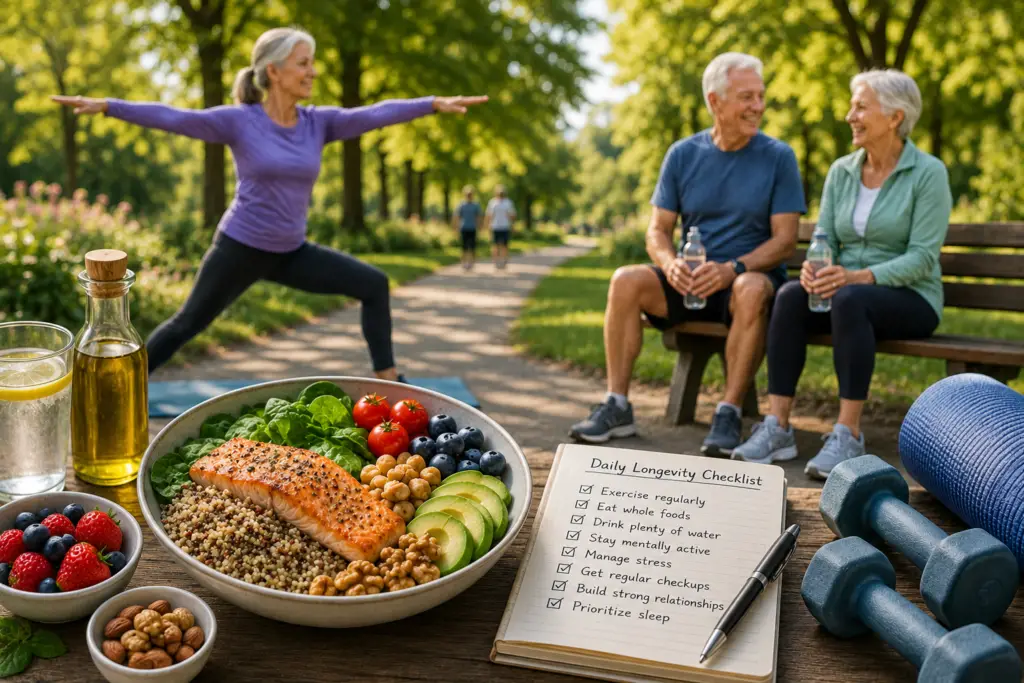
It may be something much simpler: eat well, move often, stay connected, slow down occasionally and leave room for pleasure.
That’s a healthy-aging philosophy worth borrowing—no passport required.
About the Author
RN CJAY, RN, PMHNP
RN CJAY is a Registered Nurse with more than 30 years of healthcare experience. Through Healthy Aging Guides, she shares evidence-based information on nutrition, healthy aging, wellness and lifestyle habits to help adults over 50 make informed health decisions.
This article is for educational purposes only and is not a substitute for individualized medical advice. Speak with your healthcare provider about alcohol use, nutrition or lifestyle changes that may affect your health.
References
World Health Organization. From loneliness to social connection: charting a path to healthier societies. WHO Commission on Social Connection, 2025.
Furbatto M, Lelli D, Antonelli Incalzi R, Pedone C. Mediterranean Diet in Older Adults: Cardiovascular Outcomes and Mortality from Observational and Interventional Studies—A Systematic Review and Meta-Analysis. Nutrients. 2024;16(22):3947.
Santé publique France. How can we reduce the risks associated with alcohol consumption? Updated January 26, 2026.
Santé publique France. What are the health risks associated with alcohol consumption? Updated 2026.